
True Hospitality in Bologna
April 9, 2026


During my visit to Bologna, Italy, I was reminded of the essence of genuine hospitality, even in a place that’s not your home.
I had the pleasure of meeting Ece, a university student studying abroad in Bologna. As we enjoyed our cappuccinos, she shared her exciting journey that led her here. Originally from Izmir, Turkey, Ece spent a significant part of her life in Germany, which ignited her passion for travel at an early age. With her sights set on studying in Italy, she was captivated by the rich culture and vibrant social environment. As she and her father packed their car for a road trip, Ece made the brave decision to relocate to Bologna to pursue a degree in Business, immersing herself in a culture and language that were new to her.
Though she faced some initial challenges in adjusting, Ece quickly discovered the community she sought. She surrounded herself with a diverse group of friends, including Turkish, Italian, and international students. Encouraged to connect with other Turkish university students, she found a supportive network that truly understands her. Even in her first year, Ece has become comfortable sharing the city she adores with others.
Ece graciously took on the role of my tour guide for the day, eager to show me her favorite spots in Bologna, known as the “Seven Secrets.” As we strolled between the secrets, we discussed life as university students. One intriguing sight was a small rectangular cut-out in the street; peering into it felt like gazing at a canal in Venice! Another highlight was the “Due Torri,” or the Twin Towers, which stand proudly in the city. At 48 meters tall, one tower leans dramatically at about four degrees—steeper than the famous Leaning Tower of Pisa.
One of the aspects I cherish most about Turkish culture is their exceptional hospitality. Ece’s warm welcome made me feel at home, even in a city that isn’t hers. The next time you find yourself in Bologna, be sure to explore the city and uncover the remaining five secrets on your own!
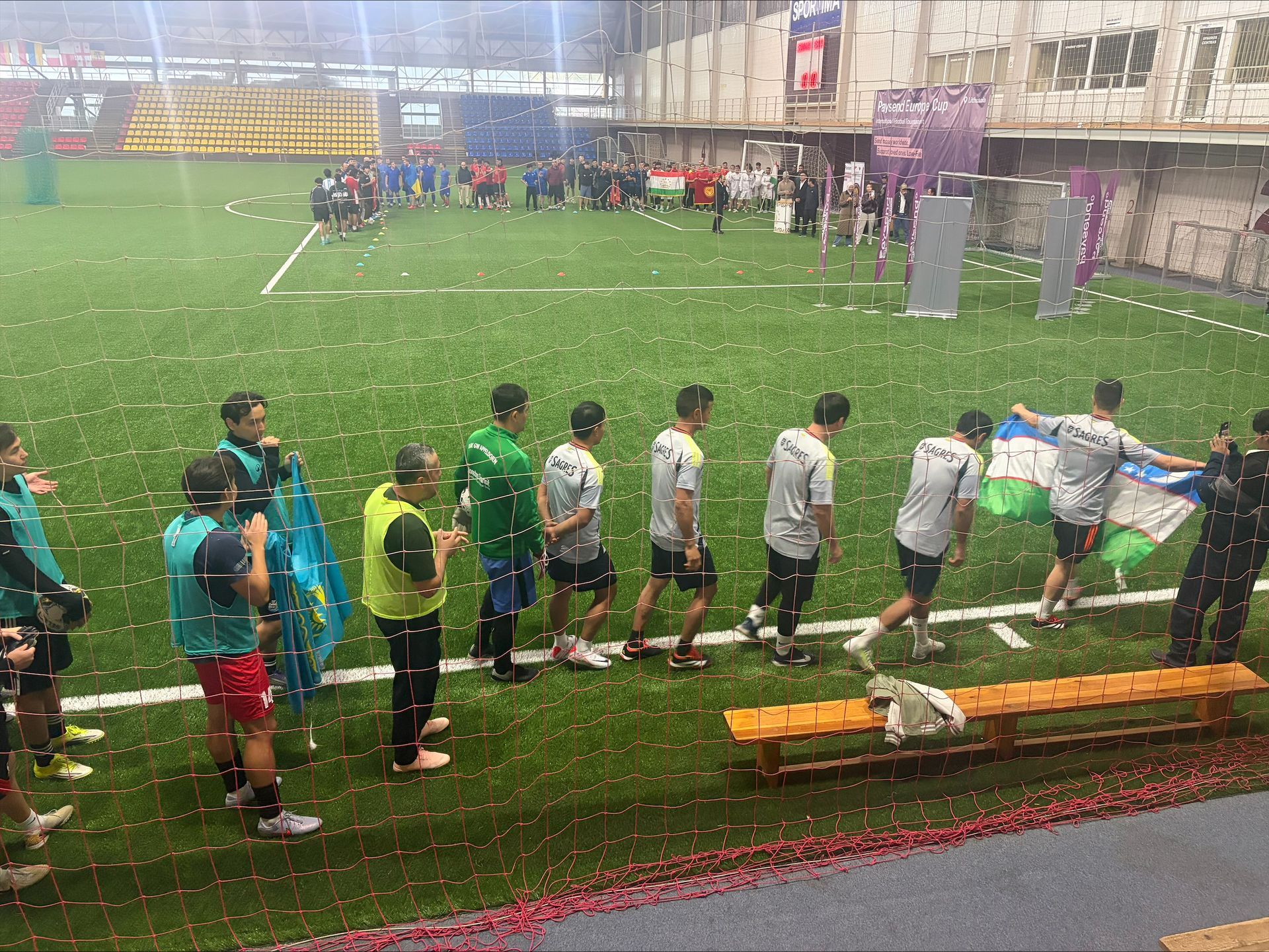
When planning our trip to Lithuania, the Instagram algorithm helped bring posts about the Paysend European Cup 2026 to our feeds. Paysend is a money transfer company and is used by millions of workers to help send money home to their families and loved ones. They, along with the Kyrgyz Diaspora of Lithuania, put together the Paysend European Cup 2026 for many diasporas to compete against each other in football. There were about 20 teams competing against each other in four fields. Teams represented diaspora from many different countries, including Kyrgyzstan, Kazakhstan, Tajikistan, Uzbekistan, Afghanistan, Morocco, Bangladesh, and Lithuania. The most representation came from the Central Asian countries, with many having multiple teams to represent them. I came not knowing anyone but was shown so much kindness and hospitality once I started talking to people. It was great to see how the Kyrgyz Diaspora of Lithuania showed their Central Asian culture to all those in attendance. They had a small yurt set up with displays of traditional Kyrgyz clothing, flags, and other traditional symbols. For lunch, I was invited to join everyone in eating plov and bread on toshaks, very Central Asian style. It was incredible to see the hospitality Central Asians have offered to other diaspora groups and to teach them about Kyrgyz culture. All the teams came together to eat with each other and create friendships. Sitting among everyone, it was a joy to hear so many different languages while getting to talk and meet many of the players and hear about their time in Lithuania. I had an amazing time seeing Central Asian culture be represented and seeing the diaspora communities come together for some good ol' football.

A story can be told a thousand ways through a thousand mediums, and even so could be understood differently in an infinite number of ways. Storytelling is an art appreciated everywhere since the beginning of the world. One of the forms storytelling can take on is created when color meets a canvas. Though it doesn’t take great skill to tell a story through a painting, there are some who are gifted with the ability to evoke great emotion through it. Dilorom is one of those people and we got the chance to interview her; getting a glimpse of her vast collection. She called us from her studio in Tashkent, and we were able to chat about her favorite pieces and some of her consistent themes. We first saw Dilorom online while her work was being showcased at the Uzbek Independence Day celebrations being held in several of the Baltic Sea cities. She has connections with Uzbek people abroad and talks are in the works for her to have a personal exhibit in Riga for Novruz. Further, her work is recognized all over the world and she has traveled far and wide to display the values of Uzbek culture in her paintings. When asked, she told us her favorite place to be is her studio. She explained to us that it is the one place she feels at home among her paintings. She described each of them as her children, having poured out so much of her being into each one of them. The themes in her paintings spoke volumes of how she illustrates Uzbek culture. Often, one can see open doorways, pomegranates, and respected elderly in her paintings. She explained each of these with great detail and how they relate to the culture she is trying to share with others. Hospitality is one of the praised characteristics of the Uzbek community, and there is no better definition for it than an open door. An open door leading the viewer freely into their home, their life, and into their warmth. The pomegranate is a common symbol for family and fertility in Central Asia and goes along with the importance of family. This brings us to the beauty and wisdom found in those older than us and the great value placed on respecting them in the Uzbek culture. Dilorom gives insight into the foundations of Uzbek culture in a way that is captivating with each new color and brushstroke. If you are in Tashkent, please make time to visit her studio. We are honored to have spoken with her and gotten to hear firsthand what inspires each piece. We also hope to see more of her work as we continue to travel the world.

Japan is known for its ramen and wagyu steaks, but it is also a place for cultures to come together. In the streets of Tokyo, you can find cuisine from a number of cultures around the world. So, it is no surprise to find Uzbek food among the masses, nor is it a surprise that the Japanese love it as well. Just like in Uzbekistan, the people who own these restaurants are welcoming and kind. These aren’t just places to cook food, but they are places to gather and feel at home even in a completely different place. Whether you only have time to grab a quick shawarma on the go, or if you need to sit down and enjoy a plate of lagman or plov to brighten your day, Halal Sukara is the place to go! Halal Sukara is located in Tokyo, not far from Ueno Station and Park. We had the opportunity to stop by the restaurant for dinner and quickly felt at home within the beautifully decorated space. We ordered shawarma and plov, and we can say it was very delicious! As we were eating, a conversation started with the owners. They have been living in Japan for 13 years and even had kids who were attending an international school there. They are originally from Samarkand in Uzbekistan. They were so kind to us and even showed us the tandir they made the samsas in. If you are looking to try Central Asian food in a warm environment, Halal Sukara is definitely the place to go. You will be met with friendly faces and great food no matter the day. Japanese people can experience a piece of Uzbekistan and see how sweet the culture is, and if you are a Central Asian traveling through Tokyo, you can get a taste of home. Anyone who loves and appreciates the cuisine of Central Asia can be content at Halal Sukara.

We travel all across the world and meet with so many people, yet there are still so many we don’t get to meet with. Lucky for us, technology bridges the barriers of borders and language. Recently, we had someone reach out to us first, and we are so glad they did because we got to meet Kyzzhibek. However, though we were just in Hungary recently, we weren’t able to physically cross paths with her. So, we did what anyone would do and set up a video call! Kyzzhibek is from Aktobe, a city in western Kazakhstan. We did not know much about Aktobe before the interview, but after talking with her, she taught us so much about the region. She loves being from Aktobe and the unique opportunity it gave her of growing up outside of the largest cities. But it did not limit her opportunities for academic advancement. Kyzzhibek was able to learn English through high school before deciding to attend university in Hungary. In contrast to everyone we spoke with in Hungary, Kyzzhibek is living and attending the University of Pecs. Yet, she is similar to the other Central Asians living in Hungary by being on the Stipendium Hungaricum scholarship. She is studying architecture, which led her to want to study in Pecs. She told us that she felt that Budapest was more science- and technology-driven, while Pecs had a more creative feel. This creative feel is exactly what she would need to thrive in architecture. She still enjoys other parts of Budapest and makes frequent trips to the capital city, which gives her the opportunity to connect with other Kazakhs as well. She mentioned how she loved being able to travel to other European countries so easily, but that she also loved the fact that she could learn about other cultures and peoples in Hungary. She gets to experience this even more with her roommate, who is Azerbaijani. Learning her roommate's culture has shown her the value in understanding other people's lives. We were overjoyed to talk with Kyzzhibek and hear about her life in Hungary. We are now adding Aktobe to the list of Central Asian cities we have to visit after hearing wonderful things about it.

The different people you meet across the world can have an impact on your life. With each story and each new face, you are left with a small piece of them. A piece they thought was important enough to share with you. A memory you keep and can reflect on for a lifetime. As I was able to return to Kaunas briefly this trip, I remembered the last meeting I had there and how I was encouraged by two Kazakh people who fell in love in Lithuania. On this trip we had a meeting that fell farther down the line of life after love and children. We got to meet Acel Ezhe, who, after her daughter turned thirty, decided to try her hand at life in Europe. Acel is originally from Bishkek, Kyrgyzstan, but she moved to Lithuania three years ago. Her choice of Lithuania could be simplified to a job, and she had many avenues to choose from. Acel has five different diplomas that could have been used to find a job, but being a seamstress just happened to work out for her. She told us that she does like it in Lithuania, and especially Kaunas. Though the country lacks the mountains of Kyrgyzstan, it still boasts beautiful nature throughout. She has traveled to many places in Lithuania and seen much of the nature this way. She has been able to travel with the Kyrgyz diaspora as they seek to share their culture with the people of Lithuania. We talked with her about some of the important aspects of life abroad, and she focused on their diaspora community. She explained to us how they are a close-knit community, with each person having a different role. They function as a whole, and if one needs something, the others are sure to help. This is not always the case with diasporas that live abroad, and Acel stressed that she is grateful for them. She told us a story about how they all gathered to celebrate her birthday and that some even made the trip from Vilnius to celebrate. Even as we met with Acel, we were welcomed to be a part of this. The meeting we had was filled with hospitality, food, and warmth as she shared with us. Asel Ezhe told us she is thankful to Lithuania for having the opportunity to unite different nationalities every year. She believes the “Culture Sodras” is an excellent idea for this purpose. I have been impacted as I see and hear about how a group of similar people in a new environment can come together and be stronger as a whole. This takes the willingness and kindness of each individual, and it will not be forgotten.

Though I had traveled to Poland before even getting to meet Kyrgyz people there, this wasn’t where I met Bemas. In 2026, the World Nomad Games were hosted in Kyrgyzstan, and Travel Eurostan made it a point to be there to experience the Central Asian culture on full display. The amazing thing was that countries from all around the world sent Kyrgyz representatives to the Nomad Games. They showcased those who attended the culture of their host country, and much like we do, there is a Kyrgyz person in their home country. This is how I found out that Bemas was in Kyrgyzstan and is currently living in Poland. Gratefully, after a busy Nomad Games, we were able to meet up in Bishkek before she headed back to Warsaw. Bemas moved to Poland around 8 years ago and has since made it her home. Poland is one of the many places where many Kyrgyz people live, and this has been a benefit to her to have friends from home. She mentioned that a couple just recently opened a Navat in Warsaw, which is a popular restaurant in Kyrgyzstan! I may have to go back to Warsaw just for the taste of beshbarmak in Europe. She now works at JLL, an English company in Warsaw, where she is the Senior Analyst in Lease Administration. Bemas even offered to let us come again to Warsaw and see her building; I might have to take her up on that. She likes it there and told me that in the future she wants to improve her Polish language so that she can be an even more integrated part of the community there. When she is not working, the majority of her time is spent investing in the Danaker Diaspora of women from Kyrgyzstan in Poland. It is an NGO with the primary goal of supporting migrant women and hosting events to educate the diaspora on cross-cultural living. As Bemas described it, they are passionate about helping Kyrgyz diaspora women all over Europe. It is important that the diaspora groups become registered and have the ability and funds to truly help and support those living outside their home countries. Just this year, they had a forum that brought in important leaders from Kyrgyzstan and Europe to discuss different projects and goals. I look forward to hearing what Danaker will do in the future and hopefully get the chance to continue to meet with and interact with its members.

Tokyo Station is known for its beautiful red-brick design and serves as a central transportation hub for tourists and locals. Almost all metro trains connect at this stop, so people are always walking around, and there are plenty of places to shop or eat. We had the honor of meeting with Robiya and her daughter at Tokyo Station. We visited Aalto Cafe and got coffee and pie, then walked around the indoor shopping area that had everything from clothing, jewelry, and makeup to home furniture. Robiya is from Andijan, Uzbekistan, and has been living in Tokyo for the past two years. She studied in Uzbekistan and earned her bachelor's degree in teaching English. Her family that she is very close with helped introduce her to her husband, who is also from Uzbekistan. He has been living in Tokyo for the past ten years working in the hotel industry but returned to Uzbekistan for them to get married. After getting married, they moved back to Tokyo and started growing their family. They have a two-year-old daughter and are currently expecting a baby boy. Robiya told us that she has enjoyed living in Japan and exploring the culture and food that is very different from where she was raised. She is currently learning Japanese because the biggest challenge to living in Japan is not knowing the language. Something she is thankful for is that in her apartment building she has other Uzbek families to connect with that also have children for playdates. We also talked about what the future might hold, and Robiya said she would love to continue her education and get her master's degree. We had such a great time getting to know Robiya and her daughter while exploring some of Tokyo Station.

Before we left Hungary, we were able to meet with Akkanat and Aizhan at a local coffee shop and sit outside enjoying the nice weather before it got too hot. We learned that the girls met back home in Kyrgyzstan and were able to reconnect in Budapest. Both are working on their master's in business and marketing after receiving their bachelor's in Kyrgyzstan. We talked about the differences they have experienced in schooling and how they operate differently, so it was an adjustment to study in Hungary, but they both really appreciate the European approach to education. The girls are currently able to work remotely for startups based in Kyrgyzstan and the United Kingdom and found their jobs around the same time. Working remotely has helped them be able to travel more and explore Europe. Gracie and the girls crochet as a hobby and were able to talk about the joys and frustrations that come with counting stitches and projects they are working on. The girls do a lot together and have grown their friendship here in Hungary but do not currently live together but are on the same street. We talked about living on your own compared to with parents; it is fun but also comes with much more responsibility. Some of the challenges are learning a new language and culture, then building a new community and dating. It was interesting to see how they also were a part of the Central Asian running club and knew most of the people we interviewed. We had a great time getting to know the girls and how they are adjusting to Hungarian life. Akkanat and Aizhan's friendship was evident, and we loved getting to laugh so much and bond with them over life and culture.

After exploring Budapest, we ended up at Mon Sheri, a popular coffee shop among students in the city, where we met our new friend. Kulsun is from Kyrgyzstan and is working at the coffee shop and helped serve us, so we asked her if she was willing to tell us her story and she agreed to meet up with us. We met up a few days later at Cafe Frei, which is a unique coffee shop with different styles of coffee from all around the world. She is studying at Corvinus University and is on the Hungarian scholarship that is awarded to only 200 applicants. She had just taken her Hungarian exam because one of the scholarship requirements is to get to A1 proficiency in the Hungarian language. Hungarian is one of the hardest languages to learn, so we discussed how learning languages can be extremely difficult. Luckily, Kulsun can use English and Russian, which she is fluent in because those are the most common languages used in Budapest outside of Hungarian. Kulsun told us about how she was determined to study abroad even though she did not have many options but really wanted to go to Europe, and then the door opened to Hungary. She has loved Budapest and the new opportunities it has afforded. During our conversation, we got to talk about the differences in culture between Central Asia and Europe and how the adjustment has been. Kulsun has adjusted extremely well and built meaningful connections with people from many different backgrounds, including fellow Central Asians, Hungarians, and other international students. She shared her experiences of studying abroad, adapting to life in Budapest, and maintaining aspects of her cultural identity while living abroad. We also talked about her life in Kyrgyzstan and how she looks forward to spending time with her family and friends back home during the summer. We had an amazing time getting to know our new friend and hope to see her again.
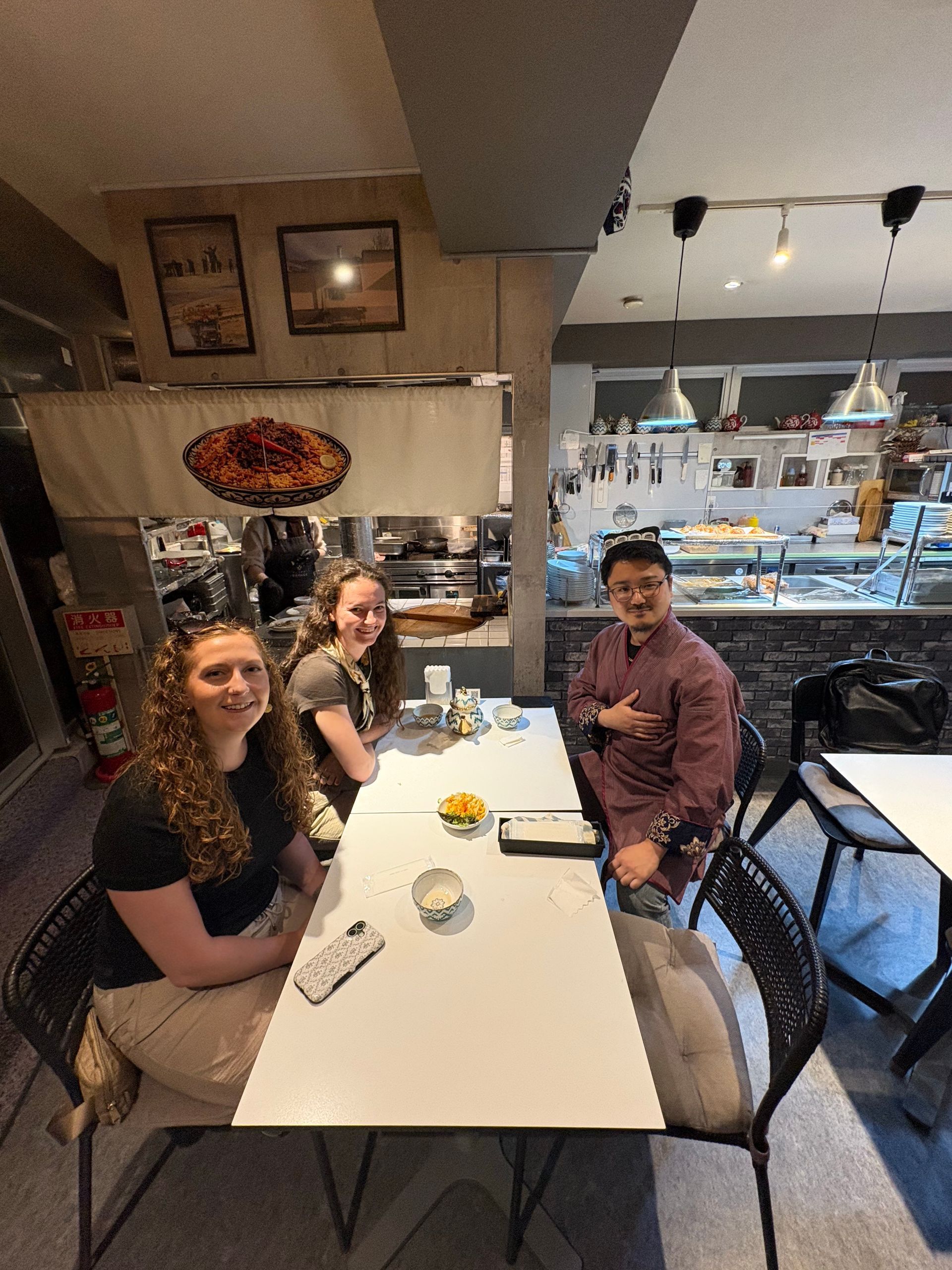
Occasionally, we get the chance to meet someone like us that loves and supports Central Asian culture without a true heritage in it. While we were in Tokyo, we met Odiljon, who is Japanese but now speaks Uzbek and continues to learn about Uzbek culture. Odiljon first came across Uzbeks in the city Nagoya. He was working there and was having a hard time making friends when he stopped into Tabassum an Uzbek restaurant. Once he showed interest in the food and culture, and in becoming friends with the Uzbeks working there, they offered him a job. He told us the cook only knew Uzbek, so he had to learn the language if he wanted to communicate with him. This was the beginning of Odiljon and the Uzbek community in Japan. But it continues and has even flourished enough for him to have traveled to Tashkent, Andijan, and Namangan. These days he lives in and works in Tokyo at a Japanese company, but he frequents the best Uzbek restaurant in the area, Samarkand Terrace. This is where we got to sit down and talk to him. When we walked in, he greeted everyone by name and with the Uzbek greeting. It was a joy to be with someone who knew the community so well in Japan and was able to introduce us as well. He shared his story over a delicious plate of plov, with interjections from the cook who was close by. Everyone in the restaurant was kind to tell us a bit about their stories as well. We are grateful to him for these introductions. Odiljon told us that he sometimes volunteers at the Uzbek embassy for those that need help with translation. This is just one of the ways he continues to help the community there. We asked him what he thought the Japanese should know about the Uzbeks. He told us that he thinks if they could just make a connection with who they are and where they come from then they would enjoy them. He wants the Japanese to see the potential in the Uzbek nation and get to know more about them. The lack of knowledge among the Japanese is holding them back from welcoming the Uzbeks even more into their country. Odiljon is trying his best to tell the Japanese about the Uzbeks and show off their culture. In the future, he hopes to hold an event that would welcome Japanese communities to learn more about the Uzbeks and Turkmen in their country.
